The Star Party
Ritual Basics
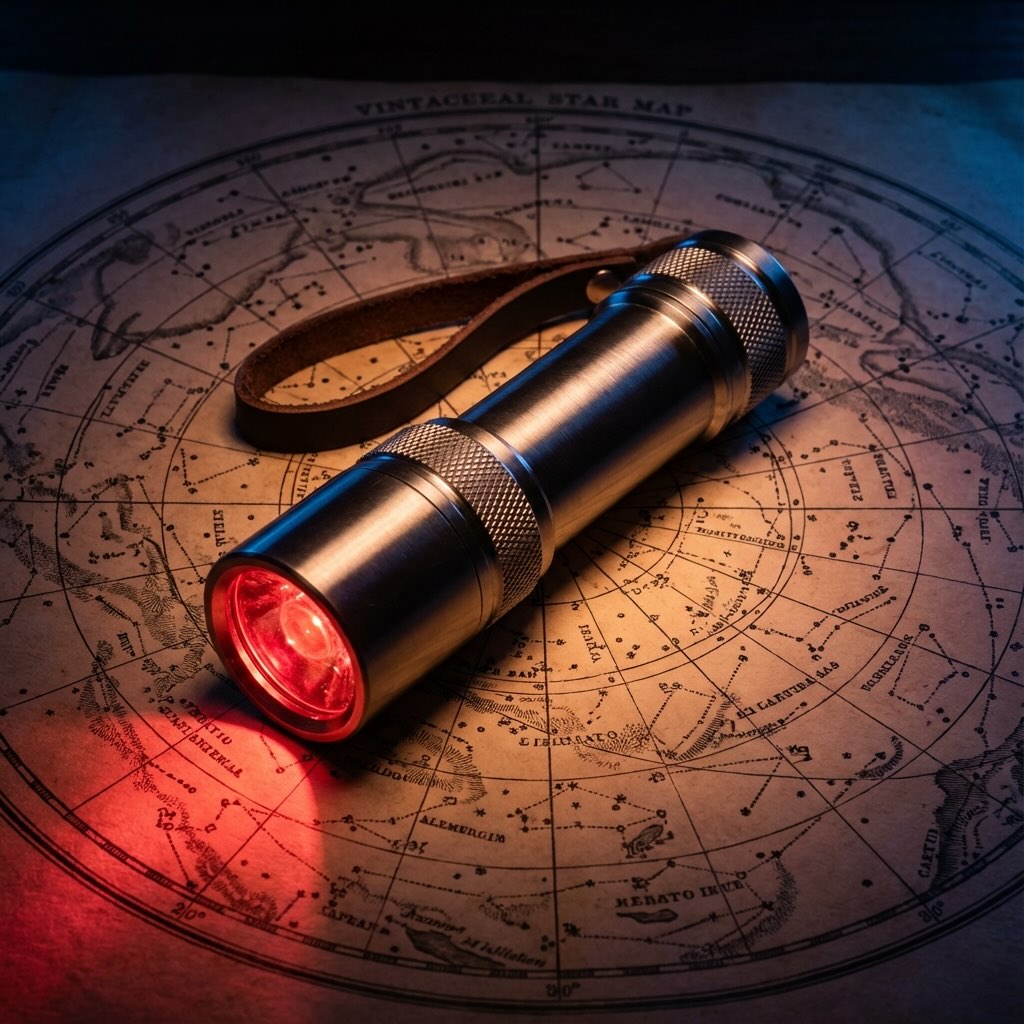
Stargazing is more than just looking up; it's a practice of sensory adaptation. Before investing in glass and mirrors, you must first learn to work with the dark—preserving night vision, orienting yourself to the sky, and understanding its motion.
Non-optical gear forms the quiet backbone of serious stargazing, enabling longer, more immersive nights under the stars without the distractions of discomfort or fumbling in the dark. Items like red lights, constellation aids, and ergonomic seating work together to preserve your vision, orient you in the sky, and keep you relaxed for hours. These essentials separate casual glances from the deep, rewarding sessions that turn stargazers into lifelong enthusiasts.
Tools of Night Vision
Essential Illumination
Your eyes take about 20 to 30 minutes to fully adapt to a true dark sky. During this time, a chemical called Rhodopsin builds up in your retinas, allowing you to see millions more stars than you could in the city.
"One split-second peak at a white smartphone screen or a standard flashlight will reset your dark adaptation instantly. It takes another 20 minutes to get it back."
Red light, however, does not break your dark vision. This is why red flashlights are the most important tool in an astronomer's kit.
Celestron Astro Night Vision Flashlight
Essential for reading star charts and moving around without blinding your fellow observers. The adjustable brightness is key for maintaining peak night vision while navigating.
Princeton Tec Remix LED Headlamp - 450 Lumens White and Red
Hands-free operation is a game changer when adjusting telescope settings. We recommend the Princeton Tec for its default dim red-light setting and multi-level red output.
The Planisphere Advantage
Analog Navigation
Apps like Stellarium are incredibly useful, but a physical planisphere and guidebook have timeless advantages: no batteries to die, no cell service required, and no harsh blue light to ruin your night vision. They offer the original, hands-on way to learn the sky and truly understand the motion of the celestial sphere.
Guide to the Stars
The 'Original' star map that never needs a battery. Ideal for learning the seasonal constellations and planning your observation night.
The Cambridge Star Atlas
Attractive, simple, and covers the whole sky. This atlas helps you find specific nebulae and star clusters. It's spiral-bound for easy use in the field.
Stargazer Comfort
Comfort Gear for Deeper Focus
Investing in comfort gear—like a sturdy, ergonomic chair and a warm layer—transforms midnight sky-watching from a stiff endurance test into a mindful, long-haul observing session. When you aren’t fighting numb legs or back pain, you can stay focused on faint galaxies, subtle nebulae, and longer observing sessions, absorb more knowledge, and savor the quiet wonder of the cosmos.
Nemo Equipment Stargaze EVO-X Folding Reclining Camp Chair
Experienced stargazers swear by reclining camping chairs as a secret weapon because they transform grueling hours of neck-straining sky-gazing into effortless, fatigue-free marathons. With a padded headrest and auto-recline to the preferred sitting angle provides maximum viewing comfort. Essential for long nights of stargazing.
THERMOS Stainless King Vacuum-Insulated Beverage Bottle
When temperatures dip and the hours stretch on, a reliable thermos becomes a stargazer’s quiet ally. Hot tea, coffee, or cocoa keeps your hands warm and your focus sharp during long sessions under cold skies.
Mastered the Basics?
Once you have your red light and your map, you're ready to start pulling in more light. The next step in the journey is powerful wide-field binoculars.
View Binoculars Guide* As an Amazon Associate, Nightsky Spots earns from qualifying purchases. Your support helps us maintain our scientific database of over 6,600 dark sky locations.